
The science
Proof, not promises.
We don't ask you to take our word for it. Sentry H2O publishes independent lab testing for the systems Mountain Pure Water carries, and the real before-and-after numbers are below — including the one result that came in lower than the rest. Honest data is the whole point.
97.44–99.93%
per compound, for the 3 PFAS quantified before and after in the under-sink sample (PFHxA 97.44%, PFHpA 99.29%, PFBS 99.93%) — not a figure for all PFAS
ND
lead, arsenic and uranium: not detected above the lab MDL in the under-sink (Treated Sink) sample
6.8 → 8.2
pH — minerals added back, not stripped out (lab-tested 6.83 → 8.21)
Non-detect
vinyl chloride in one treated sample (East Palestine, 2023) — no reduction % claimed
Independent laboratory results, published by Sentry H2O. Methodology and sources.
Daybreak-area evidence
Owner-identified before-and-after samples
The owner identified these two SimpleLab samples as Daybreak-area city water collected before treatment and after Sentry H2O treatment. They are separate from the Tempe dataset below. The pre-treatment sample was collected February 20, 2026; the post-treatment report does not state a collection date. They are not a same-day controlled trial, so the table reports exact values without inventing reduction percentages.
Arsenic & lead
Not detected after treatment
Pre-treatment arsenic was above SimpleLab's non-enforceable Health Guidance Level
Different dates
So we show raw values, not a made-up percentage
Honesty rule: never invent a reduction from uncontrolled samples
* Estimated value below the reporting limit. † The post-treatment report reports in PPM, shown as reported (in water, 1 PPM ≈ 1 mg/L). Lab and report links: Methodology and sources.
Legal isn't the same as safe
400×+
Salt Lake City's water passes every legal test — and one PFAS "forever chemical" still measures over 400 times the health guideline.
SLC tap water passes every legal test. But the legal limits were set on cost and feasibility — often decades ago. Here's how the city's own 2026 numbers compare to what independent health scientists say is actually safe.
| In SLC's water | Legal limit | Health guideline | Over the health limit |
|---|---|---|---|
| Chlorine byproducts (TTHMs)36.7 ppb | 80 ppb | 0.15 ppb | ~244x |
| Chlorine byproducts (HAA5)26.5 ppb | 60 ppb | 0.1 ppb | ~265x |
| Arsenic0.54 ppb | 10 ppb | 0.004 ppb | ~135x |
| Chromium-6 (the "Erin Brockovich" chemical)0.27-0.73 ppb | no federal limit | 0.02 ppb | ~25x |
| PFAS "forever chemical" (PFHxS)0.40 ppt | 10 ppt | 0.001 ppt | ~404x |
| Radium (radioactive)0.09-0.72 pCi/L | 5 pCi/L | 0.05 pCi/L | ~8x |
| Lead2.6 ppb | 15 ppb | 0.2 ppb | ~13x |
SLC also still has an estimated 9,400–14,500 lead service lines in the ground. The EPA's own non-enforceable health goal for arsenic, lead and these chlorine byproducts is zero — an admission that the legal number isn't the safe number.
Legal — not the same as safe. Definitions and sources: Methodology and sources.
How it actually works
See every stage that touches your water.
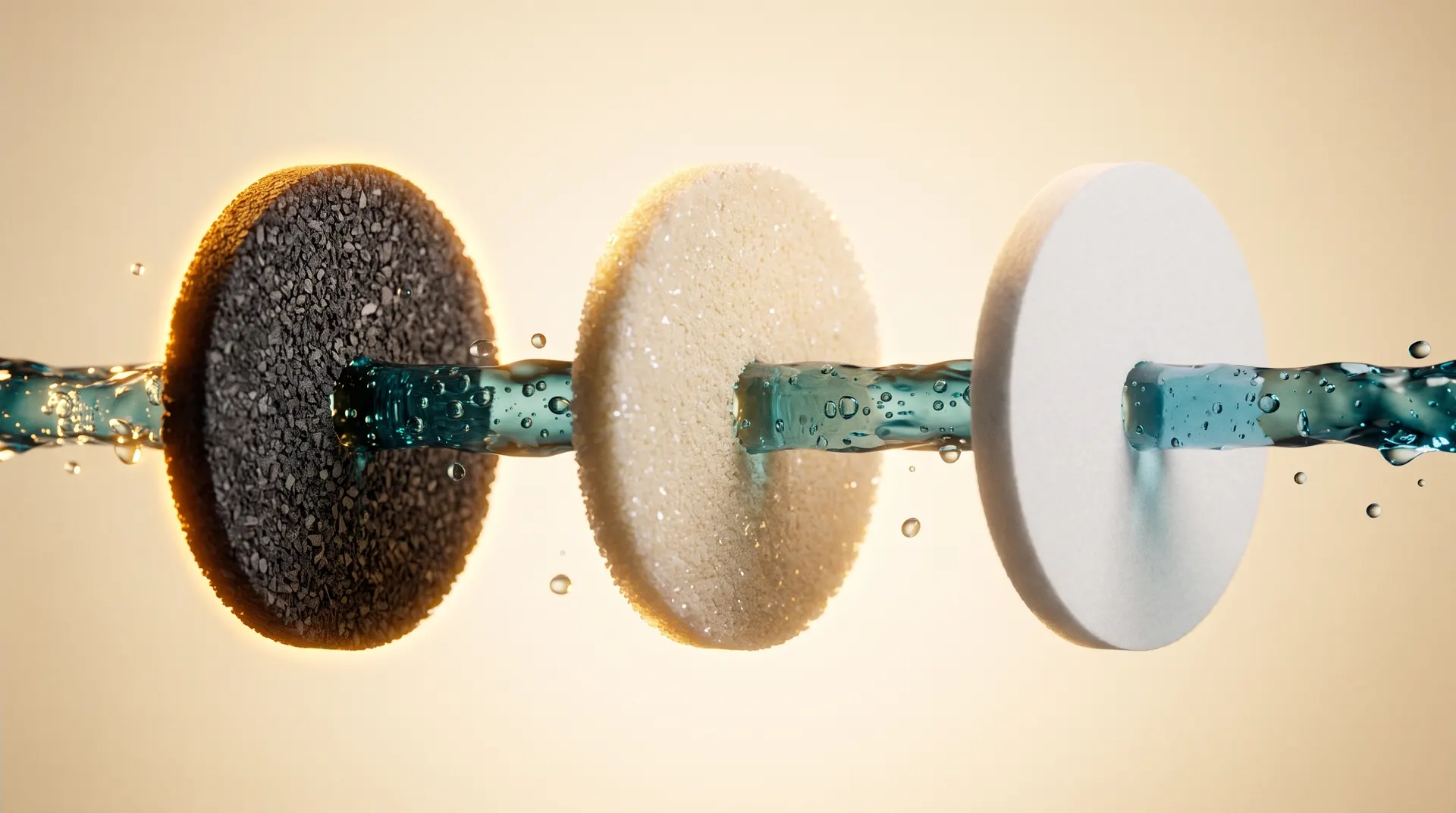
Multi-stage catalytic carbon — not reverse osmosis. It targets the bad stuff and leaves the good minerals in, with no electricity and no wasted water.
Stage 1 · catalytic carbon
ToxyGuard
Catalytic carbon and reduction media break down chlorine, chloramine, fluoride, lead and arsenic as water passes through. (The PFAS numbers below are measured for the system as a whole.)
Stage 2 · minerals back in
AlkaGuard
Re-mineralizes the water and raises pH slightly — the healthy minerals reverse osmosis strips out are kept in, for a cleaner, rounder taste.
Optional · wells (TriGuard)
BioChemGuard
Optional third stage for wells: Argonide NanoCeram PAC electropositive media (Sentry confirmed in writing). In Argonide’s own media tests it reached >99.99% efficiency at 0.2 micron (latex test spheres), >5 LRV retention of a test bacterium and >3 LRV cyst retention; those are Argonide’s media tests, not a test or certification of the finished Sentry system, and not part of the independent lab results on this page.
More on the optional third stage: what BioChemGuard does, and what we can prove.
Forever chemicals
Does it remove PFAS?
In the 2024 Tempe, AZ city-water report, most PFAS compounds found in the untreated sample were not detected above the lab's method detection limit (MDL) after the under-sink Sentry H2O Wellness System. Three compounds were quantified both before and after: PFBS fell 99.93%, PFHpA 99.29% and PFHxA 97.44%. These are per-compound results, not one figure for all PFAS.
 After Sentry H2OIn the tap
The feeling is the hook — the numbers below are the proof. No claim lives on the image itself.
One honest note: on the larger whole-house system, four of the eight PFAS detected in the source water reached non-detect. PFOA fell 47.47%, leaving 52.53% of the measured concentration — the lowest figure in the dataset. We show it because a brand that hides its weakest number hasn't earned your trust.
Results are specific to the sampled water and configuration and are not a certification; sample-to-system mapping is provisional. Methodology and sources.
Heavy metals & inorganics
Lead, arsenic, uranium and more
In the separate Tempe dataset, the untreated report detected arsenic, lead and uranium. Each was below the enforceable federal limit (the EPA MCL for arsenic and uranium; the EPA action level for lead) but above SimpleLab's Health Guidance Level, a health-protective and non-enforceable benchmark. In the under-sink sample, none of the three was detected above the lab's method detection limit (MDL).
Sample mapping is provisional and results are not attributed to any current SKU. Methodology and sources.
The good stuff stays
It adds minerals back — it doesn't strip them
Reverse osmosis strips water down to nothing; Sentry H2O's AlkaGuard stage re-mineralizes and gently raises pH for a smoother taste.
pH (acidity)
6.83 → 8.21
Less acidic, smoother taste
Alkalinity
124 → 189
More buffering minerals
It's not just what you drink — it's what you cook with. Wellness researcher Dr. Josh Axe has written that cooking with demineralized water "like reverse osmosis water, you can lose up to 60 percent of magnesium or 70 percent of manganese in your food"[1] — a figure that traces back to the World Health Organization's own research on mineral loss from cooking in low-mineral water. AlkaGuard is designed to keep those minerals in the water you cook with, not just the water you drink.
A real-world stress test
Vinyl chloride, East Palestine
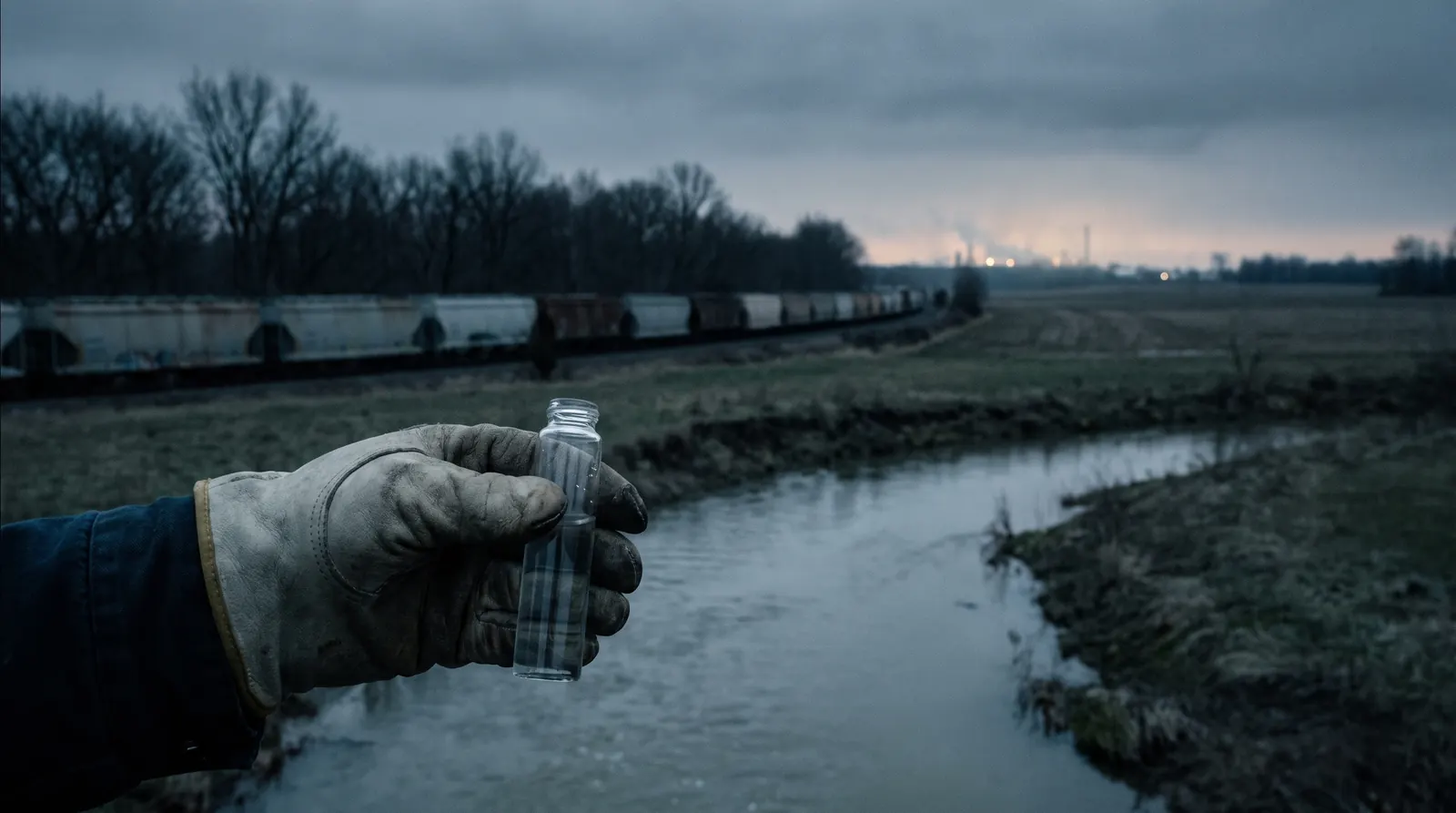
Non-detect
After the 2023 East Palestine, Ohio train derailment, a Sentry H2O Wellness System was tested by Summit Environmental Technologies against vinyl chloride — one of the chemicals released. The lab received one client sample identified as treated water, and vinyl chloride was not detected in that sample. The report has no paired untreated sample with a detected starting level, so we do not claim a reduction percentage. For context, the EPA's enforceable limit (MCL) for vinyl chloride is 2 µg/L (0.002 mg/L).
Plain-language note: the extra spike and control (LCS) rows in the report are the lab's quality-control checks, where vinyl chloride was added on purpose to verify the instrument. They are not separate Sentry H2O-treated samples and don't reflect filter performance. The meaningful result is the single treated, un-spiked sample: none detected.
What we haven't tested (yet)
Published lab reports currently cover the under-sink and whole-house systems on city water. The shower filter and portable products don't yet have their own published lab results, and we won't claim numbers we can't back up. We do not call the complete systems NSF certified. Sentry H2O uses tested or certified components where applicable, and these reports are independent tests of water samples, not a certification.
Units, labs and report links: Methodology and sources.
Methodology and sourcesLab names, sample notes, units and every source behind the numbers on this page.
Laboratories
Every figure from independent, EPA-certified laboratories — Tap Score / SimpleLab (Tempe AZ, 2024–2025) and Summit Environmental Technologies (East Palestine OH, 2023) — published by Sentry H2O. Independent testing, not an EPA-run test.
Units and detection limits
Results as reported by the testing labs (PFAS in µg/L; Tempe metals and minerals in mg/L; Daybreak post-treatment report in PPM; "not detected" = below the lab's method detection limit, MDL). Tested by independent EPA-certified laboratories. Each full report lists that sample's testing facility, EPA analytical methods, laboratory IDs, and accreditation scope per analyte. Tap Score / SimpleLab, Daybreak area (2026) and Tempe AZ (2024-2025); Summit Environmental Technologies, East Palestine OH (May 2023). Source: Sentry H2O's report summary and linked full lab reports.
Tempe PFAS dataset (2024)
Percentages use the reports' full-precision values and are rounded to two decimal places; a non-detect is reported as "not detected above the MDL", not as a percentage. The report labels its samples Hose Bib (untreated), Kitchen Sink and Bathroom. Mapping the Kitchen Sink sample to the under-sink system and the Bathroom sample to the whole-house system is provisional: it rests on Sentry H2O's draft, not-yet-final answers, and Sentry has not yet supplied the per-report sample crosswalk, so these results are not attributed to any current SKU or filter generation. Results are specific to the sampled water and configuration and are not a certification or a guarantee of the same performance in every water source.
Tempe metals and minerals dataset (2025)
About these samples (provisional): Sentry H2O's draft, not-yet-final answers describe the 2025 "Treated Sink" sample as a TriGuard under-sink system at the 500-gallon mark and the "Kitchen Sink" sample as a whole-house system at about 100,000 gallons (roughly one year for a family of three). Sentry has not yet supplied the per-report sample crosswalk, so we do not attribute these results to any current SKU. Results are specific to the sampled water and configuration and are not a certification or a guarantee of identical performance in every water source.
Daybreak-area samples (2026)
Tested by Microbac Laboratories, an independent EPA-certified laboratory. Each full report lists that sample's testing facility, EPA analytical methods, laboratory IDs, and accreditation scope per analyte. Read the privacy-redacted owner-identified pre-treatment report (sample MZA3JF) and owner-identified post-treatment report (sample 2C4J74).
Salt Lake City figures
"Health guideline" = the level set purely on health science (EWG Tap Water Database / California OEHHA Public Health Goals — a 1-in-1,000,000 lifetime cancer-risk target), not a "harm starts here" line. Figures: Salt Lake City 2026 Consumer Confidence Report + EWG Tap Water Database (system UT2590020).
Additional source
[1] Dr. Josh Axe, DC, CNS — "Is Reverse Osmosis Water Good for You? Or Does It Over-Filter?" draxe.com, November 1, 2023.
See which system fits your water
Take the 60-second water finder, or ask Wally about any result on this page.
Know your water
Know what is in your water before you choose a system.
Start with independent findings for your area, then match your home to the right Sentry H2O system.
Read your local water report
Your area's annual Consumer Confidence Report (CCR) lists what has been detected in your municipal tap water.
Salt Lake City? See what's really in your water →Check the EWG Tap Water Database
Enter your zip code for a plain-language breakdown of the contaminants found in your local supply.
Open the EWG database →At-home test kit (for well water and specific concerns)
Use our mail-in well-water kit when an individual result makes sense for your source or concern.
Shop the well-water kit →Want help matching the result to a Sentry H2O system?